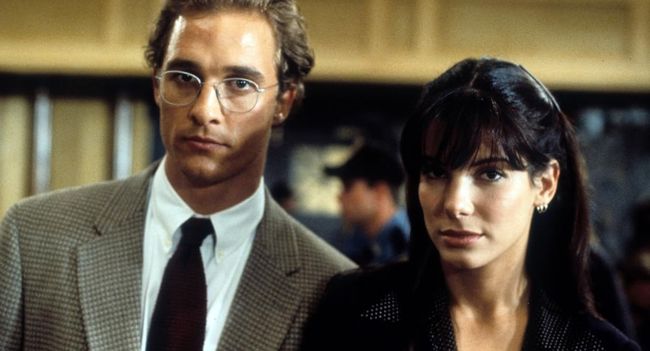
In the sweltering summer of 1996, director Joel Schumacher brought John Grisham’s explosive novel A Time to Kill to the big screen. The legal drama stars a young Matthew McConaughey as Jake Brigance, an ambitious small-town lawyer in Mississippi, and Samuel L. Jackson as Carl Lee Hailey, a devastated Black father. When two racist rednecks brutally rape and nearly kill Hailey’s 10-year-old daughter Tonya, the justice system seems ready to let the monsters walk free. What happens next shocks the entire town — and the nation.

Unable to trust the courts, Carl Lee Hailey takes justice into his own hands. He guns down the two rapists in cold blood right inside the courthouse as they are being transported. The act instantly ignites racial tensions across Mississippi. The Ku Klux Klan returns with a vengeance, threatening everyone involved in the case. As the trial begins, Jake Brigance faces death threats, professional ruin, and a deeply divided community. With the help of ambitious law student Ellen Roark (Sandra Bullock) and his loyal team, Jake prepares to defend a man who openly admits to the killings.
What makes A Time to Kill so unforgettable is its raw exploration of race, revenge, and morality in the American South. Samuel L. Jackson delivers a powerful, heartbreaking performance as the grieving father, while McConaughey’s passionate closing argument remains one of the most memorable courtroom speeches in 90s cinema. The film doesn’t shy away from uncomfortable questions: Is there ever “a time to kill”? Can a jury truly understand a father’s rage when the system fails his child? The tension builds relentlessly toward a verdict that no one in the theater sees coming.

Upon its release, A Time to Kill became a massive box office hit, earning over $152 million worldwide on a $40 million budget. It received mixed critical reviews but won several awards, including NAACP Image Awards, and earned Samuel L. Jackson a Golden Globe nomination for Best Supporting Actor. Even decades later, the movie continues to spark heated debates about vigilantism, racial justice, and the limits of the legal system. If you haven’t watched it yet, prepare yourself — this is one courtroom drama that will leave you questioning everything you thought you knew about right and wrong.
