Suburbia’s Most Dangerous Swipe: Why DTF St. Louis Is the Dark, Hilarious Obsession You Didn’t See Coming
Every perfect neighborhood has a secret, and in HBO’s latest hit DTF St. Louis, that secret is just one download away. This seven-part limited series has officially finished its run, and it has left audiences reeling—blending razor-sharp dark comedy with a suburban noir mystery so addictive it feels almost criminal.
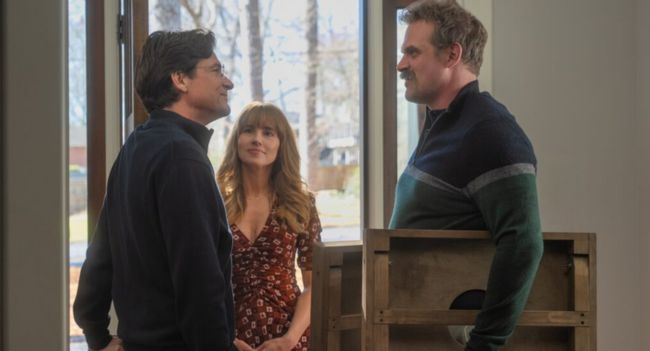
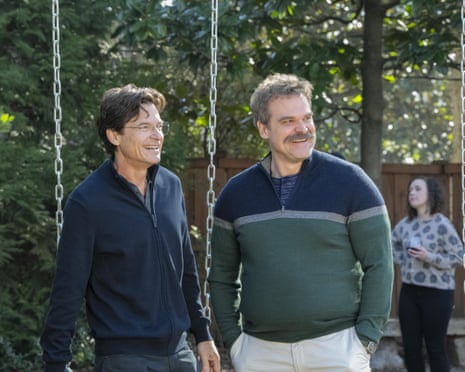
At its center is a trio of powerhouse performances that ground the absurdity in hauntingly real human emotion. Jason Bateman stars as Clark Forrest, a St. Louis weatherman whose soul is as stagnant as the suburban weather he predicts. When he strikes up an unlikely friendship with the station’s ASL interpreter, Floyd—played with incredible, raw vulnerability by David Harbour—the two men find themselves bonding over the crushing weight of their midlife unhappiness.
Their solution? A misguided, desperate dive into a local hookup app that promises exactly what its title suggests. But what starts as a clumsy attempt to reclaim a bit of excitement quickly devolves into a high-stakes disaster when Floyd’s wife, Carol (Linda Cardellini), is pulled into the fray.
A Masterclass in Midlife Unraveling
DTF St. Louis succeeds because it refuses to play by the rules of a standard comedy. It’s a messy, unapologetic look at what happens when people finally stop trying to maintain their “perfect” lives and instead lean into their worst impulses.
-
The Unbeatable Trio: Jason Bateman brings his signature deadpan, anxious charm to a role that slowly reveals a much darker edge. David Harbour continues to prove his range, moving effortlessly between hilarious awkwardness and profound sadness. Meanwhile, Linda Cardellini is the show’s quiet fire, delivering a powerhouse turn as a woman quietly reaching her breaking point.
-
Writing with a Bite: Under the direction of Steven Conrad, the show masterfully balances laugh-out-loud dialogue with gut-punch insights into the realities of loneliness and marital regret. It’s cynical, yes, but it’s also deeply, painfully observant.
-
The “Suburban Noir” Appeal: The series keeps you trapped in a web of shifting perspectives. With its nonlinear storytelling, it expertly pulls the rug out from under the audience, building tension that culminates in a finale that is as devastating as it is inevitable.
:max_bytes(150000):strip_icc():focal(749x0:751x2)/dtf-st-louis-2-041026-2102982d3a1d48a3a2b2bb9e1698550b.jpg)
Why It’s Already a Cult Classic
With an 89% score on Rotten Tomatoes, DTF St. Louis has firmly cemented itself as a must-watch for fans of high-tension, darkly comedic gems like The White Lotus or Barry. It doesn’t shy away from the moral ambiguity of its characters—it forces you to root for people who are consistently making the absolute worst decisions possible.
By the time the final episode hits, you’ll be left wondering how a simple swipe on a phone could lead to such a massive, life-altering catastrophe. If you’re looking for a binge-watch that is funny, heartbreaking, and completely off-the-rails, head over to Max. Just be warned: after watching these three navigate the world of local apps, you might want to delete your own accounts immediately.