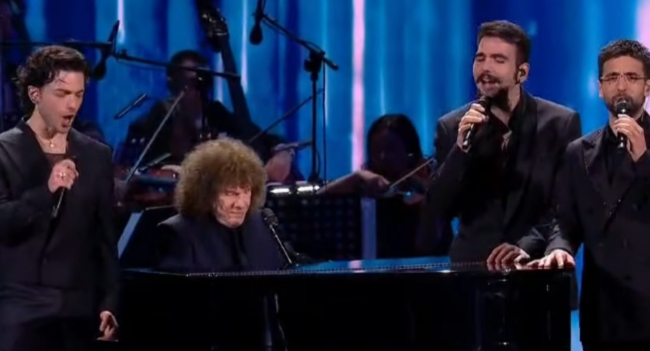
THE MEETING OF LEGENDS: WHEN IL VOLO AND RICCARDO COCCIANTE REIGNITED THE PASSION OF “BELLA”
There are moments in musical history where the stars align perfectly, bridging the gap between the creators of the past and the torchbearers of the future. One such unforgettable moment occurred when the internationally acclaimed operatic pop trio Il Volo joined forces with the legendary Italian-French singer-composer Riccardo Cocciante to perform “Bella”.
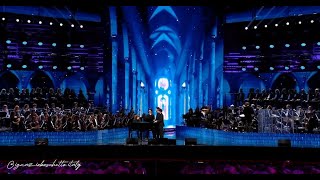
Written by Cocciante himself for his 1998 magnum opus—the record-breaking musical Notre-Dame de Paris—“Bella” is a masterpiece of dark romanticism, obsessive desire, and operatic grandeur. When Cocciante’s raw, gravelly passion met the pristine, soaring operatic lung power of Piero Barone, Ignazio Boschetto, and Gianluca Ginoble, the result was nothing short of a theatrical earthquake. It was a masterclass in vocal storytelling that reminded the world why classical melody and raw human emotion are entirely timeless.
The Genesis of a Masterpiece
To understand the weight of this collaboration, one must understand the legacy of “Bella”. As the centerpiece of Notre-Dame de Paris (based on Victor Hugo’s classic novel), the song is a unique three-part declaration of love, lust, and anguish directed toward the beautiful gypsy girl, Esmeralda.
In the original musical, it is sung by three distinct characters with wildly contrasting motives:
-
Quasimodo: The hunchback, who loves her with pure, tragic selflessness.
-
Frollo: The archdeacon, torn between his holy vows and demonic lust.
-
Phoebus: The handsome captain, caught between his aristocratic fiancée and physical desire.
+---------------------------------------------------------+
|             "BELLA" – VOCAL AND CHARACTER ARCHETYPES     |
+-------------------+-------------------------------------+
| Character         | Emotional Core                      |
+-------------------+-------------------------------------+
| Quasimodo         | Pure, tragic, unrequited love       |
| Frollo            | Tormented, forbidden desire         |
| Phoebus           | Superficial, passionate lust        |
+-------------------+-------------------------------------+
By bringing Il Volo into this sonic world, Cocciante did not just find backup singers; he found three young men capable of embodying the complex emotional depth required to bring Victor Hugo’s characters to life through song.
A Symphony of Contrasts: The Performance Breakdown
The performance kicked off with an intimate yet grand orchestral introduction. Standing alongside the maestro himself, the members of Il Volo exuded a deep sense of reverence. This wasn’t just another pop cover; they were sharing the microphone with the composer who shaped modern European musical theater.
1. Gianluca Ginoble: The Gothic Romance

Gianluca opened the piece, his rich, velvety baritone perfectly capturing the tragic, yearning soul of Quasimodo. Ginoble has always possessed a cinematic warmth to his voice, and as he sang the opening lines of adoration for Esmeralda, he grounded the performance in profound vulnerability. His smooth lower register set a dark, romantic foundation for the arena.
2. Ignazio Boschetto: The Intense Transition
As the orchestration swelled, Ignazio took the reins. Blessed with a lyrical tenor voice capable of expressing immense emotional pain, Ignazio captured the conflicted, obsessive torment of Frollo. He masterfully built the tension, his voice cutting through the live orchestration with crystalline clarity and a dramatic, crying quality that kept the audience utterly spellbound.
3. Piero Barone: The Operatic Thunder
When the song demanded raw, operatic power, Piero stepped forward. His dramatic spinto tenor injected the driving, heroic, yet conflicted passion of Phoebus into the mix. Piero’s soaring high notes didn’t just fill the venue—they shook it. His flawless breath control and classical resonance brought the house down, earning spontaneous mid-song cheers from the crowd.
4. Riccardo Cocciante: The Soul of the Creator

But the true magic occurred when Riccardo Cocciante joined his voice with the trio. Cocciante does not sing with classical precision; he sings with his guts. His famously raspy, gravelly, and intensely emotional vocal delivery provided a stunning, gritty contrast to Il Volo’s polished operatic textures. Watching the 79-year-old maestro unleash a torrent of raw, unbridled passion alongside three men in their early 30s was a beautiful display of artistic vitality.
“To see Cocciante perform his own masterpiece with Il Volo is like watching a painter put the final touches on a canvas with his finest apprentices,” a prominent music critic noted. “The contrast between raw grit and operatic beauty was breathtaking.”
The Climax: Four Voices, One Esmeralda
The definitive highlight of the performance arrived during the grand finale, where all four vocalists joined together for the iconic polyphonic chorus.
"Bella...
C'est un mot inventé pour elle..."
(Beautiful...
Is a word invented for her...)
Walking toward the center of the stage, the four artists locked eyes, completely immersed in the tragic world of Notre-Dame. The vocal arrangement blended Gianluca’s romantic depth, Ignazio’s emotional warmth, Piero’s operatic steel, and Cocciante’s legendary rasp into a massive, wall-of-sound harmony. Backed by a soaring live orchestra, the final crescendo felt less like a standard concert piece and more like an epic, theatrical climax.
The Legacy of a Uniquely Powerful Alliance
When the final dramatic chord cut off, the venue erupted into a deafening standing ovation. Cocciante, visibly moved by the power of the performance, warmly embraced Piero, Ignazio, and Gianluca, passing the torch of his musical legacy to a new generation.
For Il Volo, this collaboration was another milestone proving their incredible versatility. While they are globally famous for pop-era anthems like “Grande amore”, tackling the theatrical, character-driven complexity of “Bella” alongside its creator demonstrated their growth as true dramatic artists.
Conclusion: Music That Transcends Time
The pairing of Il Volo and Riccardo Cocciante for “Bella” stands as a shining example of the enduring power of live, passionate music. It proved that great songs never age; they simply wait for the right voices to breathe new life into them. In a digital world increasingly filled with computerized autotune, these four men stood on stage with nothing but their raw vocal chords and a profound understanding of human tragedy, reminding us all that true art is born directly from the soul.