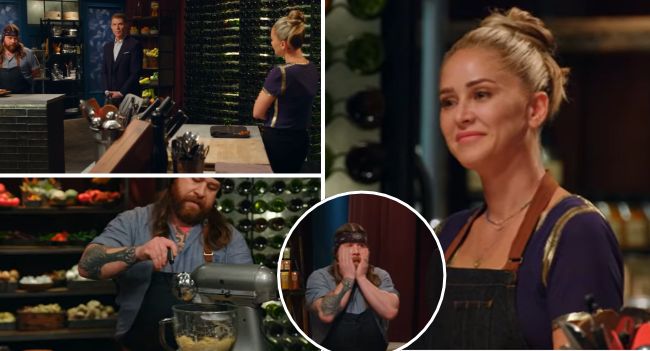
Conspiracy of “Insiders and Regional Bias” in the Final Round: Unpacking the Controversial Pasta Showdown Between Jonathon Sawyer and Brooke Williamson
In the high-stakes world of televised culinary competitions, the double-point final round is designed to be the ultimate, objective equalizer where glory is earned purely on the plate. Yet, the fateful showdown between challenger Jonathon Sawyer and Resident Titan Brooke Williamson—centered around a high-pressure handmade pasta challenge—ignited a firestorm of controversy that extended far beyond simple flavor profiles. Rather than celebrating culinary triumph, the broadcast became ground zero for fierce allegations of “insider collusion” and blatant regional favoritism unfolding live on American television.
Entering the decisive round under immense pressure, Jonathon Sawyer took an extraordinarily bold and perilous gamble by choosing to hand-craft fresh pasta from scratch against a relentless clock. In professional kitchens, fresh pasta under tight time constraints is notorious for being unforgiving, where the slightest miscalculation in hydration or boiling time can spell disaster. However, what left viewers outraged was not Sawyer’s fearless risk-taking, but the glaringly inconsistent judging standards displayed by acclaimed guest judge Nancy Silverton.
An Unspoken Alliance Among the Los Angeles and New York Culinary Elite?
Moments after victory was awarded to the Titan camp, culinary forums and social media platforms erupted with accusations of systemic unfairness. Critics raised pointed questions regarding an unspoken alliance between guest judges and the tightly knit circle of elite chefs dominating the Los Angeles and New York dining scenes. Both Brooke Williamson and Nancy Silverton stand as towering figures deeply embedded within California’s prestigious culinary establishment, whereas Jonathon Sawyer entered the arena as an outsider representing the Midwest food scene of Cleveland, Ohio.
This stark divide in geographic pedigree and industry networking cast a heavy shadow over the integrity of the blind-tasting narrative. Keen-eyed viewers argued that in winner-take-all scenarios, shared culinary sensibilities and decades-long professional camaraderie among coastal powerhouses can inadvertently create an invisible safety net—placing visiting chefs from outside these major hubs at an immediate, insurmountable disadvantage.

A Magnifying Glass for the Challenger and Kid Gloves for the Titan
Viewer frustration reached a boiling point as fans dissected the stark contrast in how Nancy Silverton critiqued the two pasta dishes side by side. According to widespread consensus online, the veteran judge appeared to take a ruthless magnifying glass to Jonathon Sawyer’s plate, hyper-fixating on microscopic technical flaws ranging from pasta thickness to sauce emulsification. Sawyer’s ambitious execution and culinary bravery were swiftly dismissed under hyper-critical scrutiny.

Conversely, when evaluating Brooke Williamson’s dish, Silverton seemed to apply conspicuously lenient standards, glossing over technical imperfections in the Titan’s dough-rolling execution that would have otherwise drawn harsh penalties. This jarring double standard transformed an ordinary food review into a revealing exposé of the unwritten rules governing American reality television—a landscape where the prestige of established coastal insiders is quietly protected against the threat of ambitious outsiders.