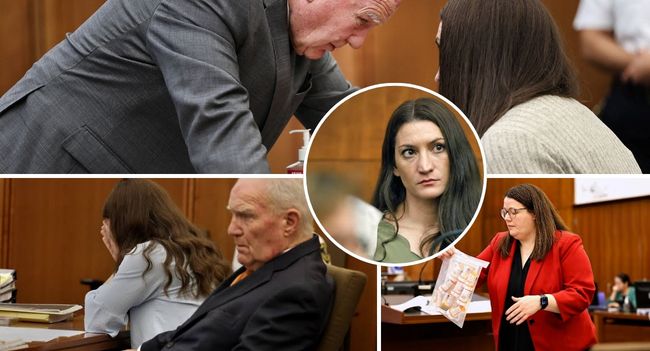
Lindsay Clancy Jury Reportedly Split 11-1 as Defense Moves to Remove Holdout Juror and Avert Mistrial

Deliberations in the high-profile murder trial of Lindsay Clancy reached a boiling point on Thursday after defense attorney Kevin Reddington revealed to reporters that the jury is locked in an 11-1 impasse, with a lone juror reportedly refusing to adhere to the court’s legal instructions. Speaking outside the courthouse following the sixth full day of deliberations without a verdict, Reddington strongly pushed back against the possibility of a mistrial, asserting that the defense had completely dismantled the prosecution’s arguments and had no reason to reset the proceedings.
Tensions flared inside the courtroom Thursday afternoon when a note from the jury foreperson prompted a testy, extended sidebar between Judge William Sullivan, the prosecution, Reddington, and Clancy herself. According to Reddington, the note explicitly conveyed that one juror “refuses to listen to the law.” In response, the defense team requested that the identified holdout juror be formally removed and replaced, leading Judge Sullivan to schedule an in-court inquiry for Friday morning before sending jurors home with reminders on reasonable doubt.
Postpartum Psychosis Defense Clashes with Deliberate Action Arguments
The latest deadlock follows Judge Sullivan’s delivery on Wednesday of a Tuey-Rodriguez instruction—a last-resort “dynamite charge” designed to urge an entrenched jury toward consensus. Clancy, 36, faces first-degree murder charges after strangling her three young children—Cora, 5, Dawson, 3, and 8-month-old Callan—inside their Duxbury, Massachusetts home in January 2023, before attempting suicide by leaping from a second-story window.
Throughout the trial, the core debate has centered on Clancy’s criminal culpability rather than the physical acts themselves:
-
The Defense Argument: Reddington argued that Clancy was suffering from acute postpartum psychosis exacerbated by severe overmedication and medical oversight failures, rendering her legally not criminally responsible for the slayings.
-
The Prosecution Argument: Assistant District Attorney Jennifer Sprague contended that while Clancy suffered from depression, her actions were premeditated and deliberate, arguing she systematically removed her children as a perceived obstacle to ending her own suffering.
With the panel having signaled an inability to achieve unanimity three separate times, the upcoming Friday inquiry regarding the dissenting juror stands as a pivotal junction. If the court finds grounds to substitute the juror, deliberations may reset; if not, Judge Sullivan may have little choice but to declare a mistrial in one of Massachusetts’ most closely watched legal battles.