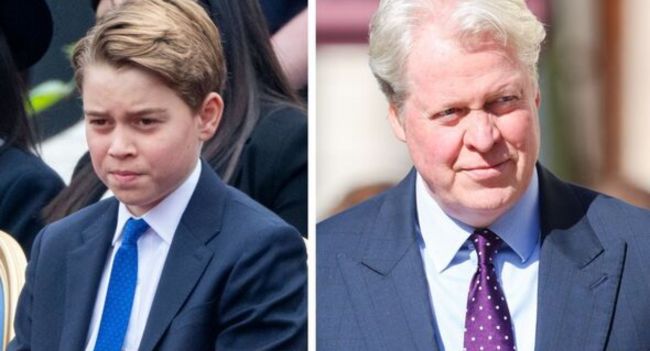
Earl Spencer Faces Backlash Over King Charles Claims as Royal Fans Ask: ‘What About George and Charlotte?’
 v
v
Earl Spencer’s forthcoming memoir about Princess Diana has ignited a fierce new royal debate — and this time, some of the criticism is focused not only on King Charles or Diana, but on the younger generation of the family.
Extracts from Swan Song: Diana, My Sister contain a series of highly personal allegations about the days surrounding Diana’s death and funeral in 1997. Among them is Spencer’s claim that the then-Prince Charles made a devastating remark about Diana during a private argument.
Buckingham Palace has challenged Spencer’s recollection, and now some royal supporters are questioning why Diana’s brother has chosen to make the allegations public nearly three decades later.
Fans Raise Concerns About George and Charlotte

The strongest reaction has centered on Prince George and Princess Charlotte.
One commenter argued that reopening such painful family history could affect Diana’s children and grandchildren, noting that George and Charlotte are now old enough to encounter the allegations themselves.
“If you really did love your sister why would you attack in this way and so damage her children and her grandchildren,” the commenter wrote, before asking why Spencer would make the claims public now.
Another argued that Diana should be allowed to “rest in peace” almost 30 years after her death.
Those comments reflect the views of individual readers rather than an official response from William, Kate or their children.
Spencer Recounts Explosive Alleged Phone Call

At the center of the controversy is Spencer’s account of an argument with Charles over Diana’s funeral.
Spencer claims he objected to Princes William and Harry walking in their mother’s funeral procession because he believed Diana would not have wanted her young sons subjected to such a public ordeal.
According to Spencer, Charles responded with a “stream of anger.”
Spencer then alleges that Charles told him: “Rest assured, we’ll forget her soon enough.”
The alleged conversation was private, and Spencer’s version cannot be independently confirmed.
Palace Challenges Spencer’s Recollection
Buckingham Palace responded unusually quickly after extracts from the memoir emerged.
While the Palace generally avoids commenting on books about the Royal Family, its statement suggested that memories formed during intense grief may not always be reliable.
It said the King was mindful that “the pain of fraternal grief can cloud reason, affect judgment and colour memory” even many years after a loss.
The response did not provide a detailed alternative account of the alleged conversation but clearly disputed Spencer’s portrayal.
Why Reveal It After 29 Years?
The timing has become another major source of criticism.
Royal commentator Richard Fitzwilliams characterized Spencer’s remarks as a “brutal and unprovoked attack” and questioned why such claims were being aired 29 years after Diana’s death.
Some readers expressed similar doubts, arguing that allegations of this magnitude would have carried different weight had Spencer revealed them closer to the time.
Others were more cautious, pointing out that without the complete context of the alleged conversations, reaching firm conclusions about what happened is difficult.
Diana’s Story Returns to the Center of Royal Debate

Swan Song: Diana, My Sister is scheduled to be published next Tuesday and is expected to contain further criticism of the Royal Family.
For Spencer, the memoir represents his account of his sister’s life and the turbulent period surrounding her death. For his critics, however, the decision to reveal private allegations so many years later raises another question entirely: how much of Diana’s painful history should be reopened when her sons — and now her grandchildren — remain part of the story?